
✕
Create a free account to see live performance
SEC rules require us to show performance inside a logged-in account.
Every strategy runs live. Inside, you see every holding, every trade, and every move to cash.
SEC rules require us to show performance inside a logged-in account.
Every strategy runs live. Inside, you see every holding, every trade, and every move to cash.
Every AI investing product now promises agents that continually learn and adjust. Strip away the marketing and that describes continuous re-fitting to recent data, which is the mechanism of overfitting. There is a right way to build adaptive models, and it is narrower than the pitch.
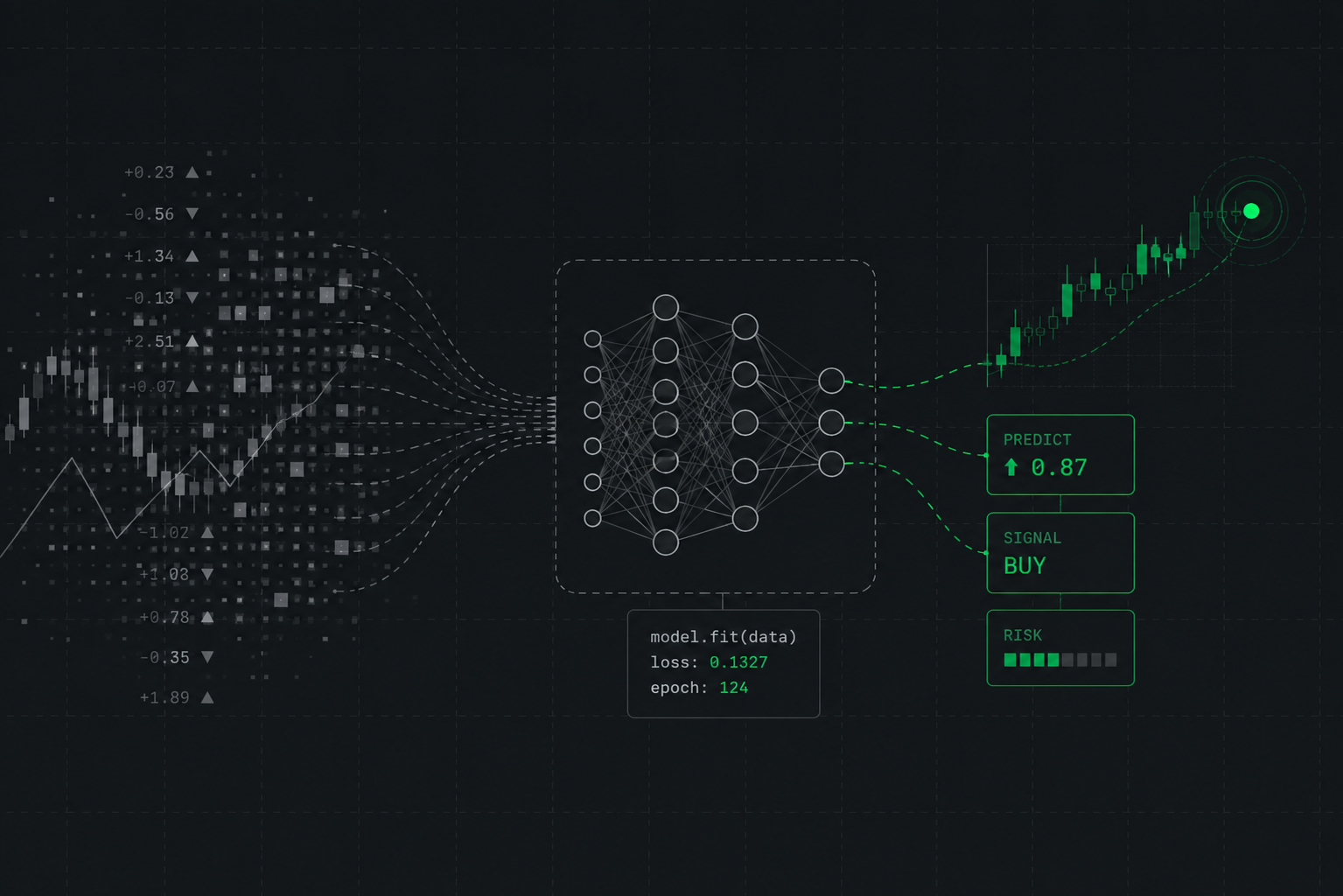
Every AI investing product now makes some version of the same promise. The agents continually learn. The models adjust with every market move. The system gets smarter the longer it runs. It is the most seductive pitch in systematic investing, because it flatters our intuition about intelligence itself: smart things learn, so a smarter strategy should learn faster.
I want to slow down on what those words actually mean, because the intuition is backwards. In markets, more adaptive usually means more overfit, and the systems that survive longest are the ones most stubborn about what they will allow themselves to learn. That is the claim this essay unpacks: a durable model is stubborn about its beliefs, which it refuses to revise on recent data; flexible about its perception, which it reads in context; and immovable about its protective rules, which adapt nothing at all. Almost nothing marketed as "continually learning" is built this way, and the difference is the whole game.
Strip the marketing down to mechanics. A system that continually learns is a system that continually re-fits its parameters to recent data. That is the entire operation. And fitting a model to a limited sample of noisy data has a name that predates the marketing by decades: overfitting. The model absorbs the noise along with the signal, mistakes the idiosyncrasies of the last few months for structure, and carries that mistake into the next position. Continuous learning does not escape this problem. It is this problem, performed on a schedule, with the most recent noise given the loudest vote.
How dangerous that is depends on the environment, and financial markets are close to the worst environment imaginable for it. The signal-to-noise ratio in asset returns is minuscule, so a fast learner ingests mostly noise. There is exactly one history, and it never repeats, so nothing the learner concludes can be checked against a counterfactual. The environment is non-stationary, meaning the statistical relationships themselves shift, which punishes recency-weighting at precisely the wrong moments. And the environment is adversarial: other participants hunt the same patterns and erode them as fast as they are found. Even the academic framework most sympathetic to adaptation, Andrew Lo's Adaptive Markets Hypothesis, holds that markets adapt the way ecosystems do, over years, through the slow entry and exit of strategies and capital, not through daily parameter updates.1
The argument does not rest on theory, because it has been tested, repeatedly and in public. The M-competitions, forecasting tournaments run since 1979 across more than a hundred thousand real time series, keep producing the same uncomfortable result: simple and combined methods beat most sophisticated ones, and in M4 the majority of pure machine learning entries lost to naive statistical baselines.2 Goyal and Welch examined the variables long claimed to predict equity returns and found the relationships unstable out of sample, failing more or less whenever a real-time investor would have relied on them.3 DeMiguel, Garlappi, and Uppal ran fourteen optimized portfolio construction methods against the naive alternative of equal weights across assets, and the naive alternative won, because whatever the optimizers gained in theory they returned in estimation error.4 Add the multiple-testing research I cited in a previous essay, showing how readily a flexible process manufactures its own evidence,5,6 and four decades of results compress into one line: in low-signal environments, the model that fits less wins more.
For the demonstration at corporate scale, Zillow obliged. Zillow Offers used a machine learning pricing engine to buy homes directly, and through the frenzied market of 2021 it kept buying at model prices while the market's character shifted underneath. In November of that year the company wound the business down, laid off a quarter of its workforce, and took write-downs in excess of five hundred million dollars. The CEO's explanation ran a single line: the unpredictability in forecasting home prices far exceeded what they anticipated.7 Note what did not happen. The model never crashed. It produced confident prices all the way down. The prices had simply stopped meaning anything.
At this point you might conclude the answer is to never adapt. Freeze the model, trust the design, hold the line. That fails too, for a subtler reason. In a previous essay I distinguished a bad stretch, where intact machinery is operating in an environment that punishes it, from decay, where the machinery itself has broken. Decay is not a hypothetical. It is one of the most heavily documented phenomena in applied machine learning, it has its own research literature, and the literature's central finding is unsettling: it happens silently.
The academic name for the disease is concept drift: the statistical relationships a model learned from its training data shift underneath it while the model stands still.8 The drift literature draws a distinction that matters for investors. Sudden drifts, a regime change overnight, are the easy case, because the damage is visible quickly. The dangerous cases are the gradual and recurring drifts, where relationships erode or invert over months, because nothing announces them. And a companion result explains why nothing announces them: under distribution shift, a model's accuracy degrades while its expressed confidence does not.9 A drifted model does not hedge its outputs or flag its own confusion. It keeps producing precise, assured answers of steadily deteriorating quality, most certain of itself exactly where it understands least.
The canonical public autopsy is Google Flu Trends. It launched as a triumph of big data, a model that estimated flu prevalence from search queries faster than the CDC could count patients, and for a while it worked. Then the world under it moved: search behavior evolved, and Google's own engineers changed the search product continuously, dozens of modifications in a single month, rewiring the model's input stream from the inside. The model said nothing. It kept publishing precise estimates that ran persistently high, overshooting actual flu prevalence by more than fifty percent in consecutive seasons and reading too high in 100 of its final 108 weeks, a stretch in which a simple model built on three-week-old CDC data would have beaten it.10 Nobody turned it off for two years, because the output looked exactly like output.
Markets add a crueler twist: in finance, drift is not a side effect but a near certainty, because the act of exploiting a relationship erodes it. McLean and Pontiff tested this directly across 97 published predictors of stock returns and measured the decay: portfolio returns 26 percent lower out of sample and 58 percent lower after publication, with the fastest decay in exactly the predictors that had looked strongest.11 The relationships a financial model trains on are wasting assets, consumed partly by the passage of time and partly by the model's own success in attracting company. A strategy frozen in permanent confidence is therefore not neutral. It is a slow-motion version of Google Flu Trends with capital attached.
The drift literature also supplies the answer to detection, and it is worth noticing what the answer is not. Drift detectors do not watch cumulative outcomes; a profit line, like a flu estimate, is the last place drift becomes visible, because outcomes are noisy and the deterioration is gradual. Detectors watch distributions: the shape of the model's inputs, the shape of its outputs, whether its predictions still precede what they used to precede.8 In investing terms, that is the yardstick I keep returning to: not the returns, the behavior. Monitored at the level of behavior, drift surfaces in weeks. Judged on returns alone, Google Flu Trends hid for two years, and a trading model can hide for longer.
So the systematic investor is squeezed between two documented failures: adapt continuously and fit noise, the Zillow path, or never adapt and drift, the Google Flu path, carried confidently somewhere you did not intend to go. The way out is not a compromise between the two speeds. It is a different question.
The mistake in asking "should the system adapt?" is treating adaptivity as a dial. It is closer to a budget. Every adaptive component is one more parameter under continuous re-fit, one more channel through which noise enters, and the budget is finite before the system as a whole becomes an overfitting engine.12 The design question was never how much to adapt. It is which layer gets the budget.
A model has two layers it could adapt. The first is its beliefs: what leads to what. "When credit spreads widen sharply, equities tend to struggle" is a belief. The second is its perception: what a given reading means under current conditions. "How unusual is today's spread widening, in the context of the past year?" is perception. Continuous-learning products spend the adaptivity budget on beliefs, re-fitting the model's understanding of how markets work to the last few months of data, and beliefs are precisely the layer where the forecasting tournaments, the failed return predictors, and the Zillow write-down all live. The durable alternative spends the budget on perception and leaves the beliefs alone.
The cleanest way to think about adaptive perception comes, fittingly, from the architecture that transformed machine learning itself. The breakthrough behind modern language models is a mechanism called attention, and its central insight is that meaning is contextual.13 The word "bank" carries no fixed meaning waiting in a dictionary; it means one thing beside "river" and another beside "loan," and the model resolves which by attending to context. A signal reading deserves the same treatment. A reading that was extreme in one era can be unremarkable in another, and a system that interprets every reading against a boundary memorized years ago is consulting a dictionary for a language nobody speaks anymore. Attention-based interpretation changes the question the system asks. Not "is this reading above the line drawn back then," but "what does this reading mean, here, in context." That is the layer where adaptivity earns its keep, because it repairs precisely the failure described above, the quiet migration of a signal's meaning, without re-fitting a single belief about how markets work. And this is the sense in which the best models refuse to learn. Nothing here is learning as the brochures mean it: no belief is revised, no parameter chases last quarter, no lesson is drawn from recent outcomes. The model declines to update what it believes because it was built so that it never needs to. Context does the adapting, and the convictions hold still.
One layer must never join the adaptive budget, and this is not optional. Perception can be contextual; protection cannot. A system's hard defensive constraints, the rules that exist for the worst moments, must remain absolute, because a defense that reinterprets itself during the emergency is not a defense. In a prolonged crisis, the context is the crisis, and any protective boundary that adapts to context will drift downward alongside the very disaster it was built to stand against. The whole design principle compresses to four words: perceive relatively, constrain absolutely.
All of this converts into questions you can put to any product that advertises continual learning, and they do more work than any backtest the vendor will show you. Which layer adapts, the system's perception or its beliefs? How many parameters re-fit, how often, against how much data? What in the system is anchored, never allowed to move, and why those things in particular? What would the system have done in the last genuine crisis, not before adapting, but while adapting? And can the vendor state the noise floor of their own backtest, the margin below which two versions of a strategy cannot be distinguished from luck?
A vendor with a real answer will name the adaptive layer narrowly and the anchored layer proudly. A vendor whose answer amounts to "everything adapts, continuously" has just described a failure mode and priced it as a feature.
Adaptation done well is rare, tied to a specific diagnosed cause, and committed to in advance, the same discipline I have argued a strategy's retirement criteria deserve. Everything else is redesigning at the bottom, on a subscription plan. And because even well-built adaptivity only tunes perception, never the underlying fact that every strategy has environments that punish it, the portfolio conclusion survives untouched: hold strategies whose failure modes do not overlap, and judge each one by what it was designed to do. The models worth owning are the ones that refuse to learn, and know exactly what they refuse.
1. Lo, A. W. (2004). The adaptive markets hypothesis. The Journal of Portfolio Management, 30(5).
2. Makridakis, S., Spiliotis, E., and Assimakopoulos, V. (2020). The M4 competition: 100,000 time series and 61 forecasting methods. International Journal of Forecasting, 36(1).
3. Goyal, A., and Welch, I. (2008). A comprehensive look at the empirical performance of equity premium prediction. The Review of Financial Studies, 21(4).
4. DeMiguel, V., Garlappi, L., and Uppal, R. (2009). Optimal versus naive diversification: How inefficient is the 1/N portfolio strategy? The Review of Financial Studies, 22(5).
5. Bailey, D. H., and Lopez de Prado, M. (2014). The deflated Sharpe ratio: correcting for selection bias, backtest overfitting, and non-normality. The Journal of Portfolio Management, 40(5).
6. Harvey, C. R., Liu, Y., and Zhu, H. (2016). ...and the cross-section of expected returns. The Review of Financial Studies, 29(1).
7. Zillow Group (2021). Third-quarter 2021 financial results and plan to wind down Zillow Offers operations. Press release, November 2, 2021.
8. Gama, J., Zliobaite, I., Bifet, A., Pechenizkiy, M., and Bouchachia, A. (2014). A survey on concept drift adaptation. ACM Computing Surveys, 46(4).
9. Ovadia, Y., et al. (2019). Can you trust your model's uncertainty? Evaluating predictive uncertainty under dataset shift. Advances in Neural Information Processing Systems 32.
10. Lazer, D., Kennedy, R., King, G., and Vespignani, A. (2014). The parable of Google Flu: traps in big data analysis. Science, 343(6176).
11. McLean, R. D., and Pontiff, J. (2016). Does academic research destroy stock return predictability? The Journal of Finance, 71(1).
12. Lopez de Prado, M. (2018). Advances in Financial Machine Learning. Wiley.
13. Vaswani, A., et al. (2017). Attention is all you need. Advances in Neural Information Processing Systems 30.
Build, test, and deploy your own strategies in Portfolio Lab. Free to start.
Educational & Research Disclosure: The content provided is for informational and educational purposes only and is not intended to constitute investment advice, a recommendation, solicitation, or offer to buy or sell any security. Any discussion of market trends, historical performance, academic research, models, examples, or illustrations is presented solely to explain general financial concepts and does not represent a prediction, guarantee, or assurance of future results. Past performance is not indicative of future results. All investing involves risk, including the possible loss of principal.
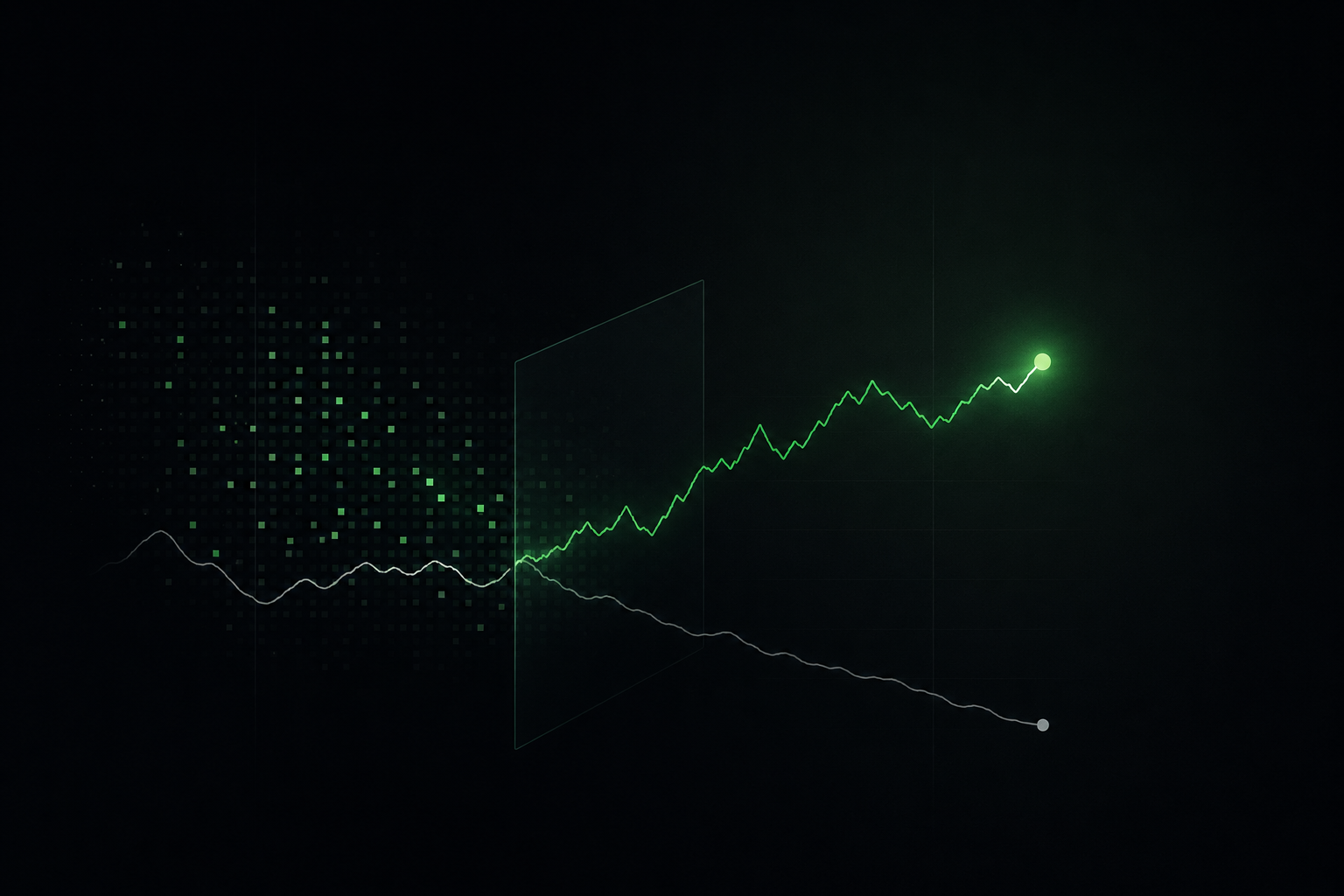
I asked Claude to build 1,000 trading strategies. Every backtest looked brilliant. Then I corrected the subtle errors line by line, and all 1,000 lost their edge. Here's why that keeps happening, and what it actually takes to build a strategy that survives.
Every AI investing product now promises agents that continually learn and adjust. Strip away the marketing and that describes continuous re-fitting to recent data, which is the mechanism of overfitting. There is a right way to build adaptive models, and it is narrower than the pitch.
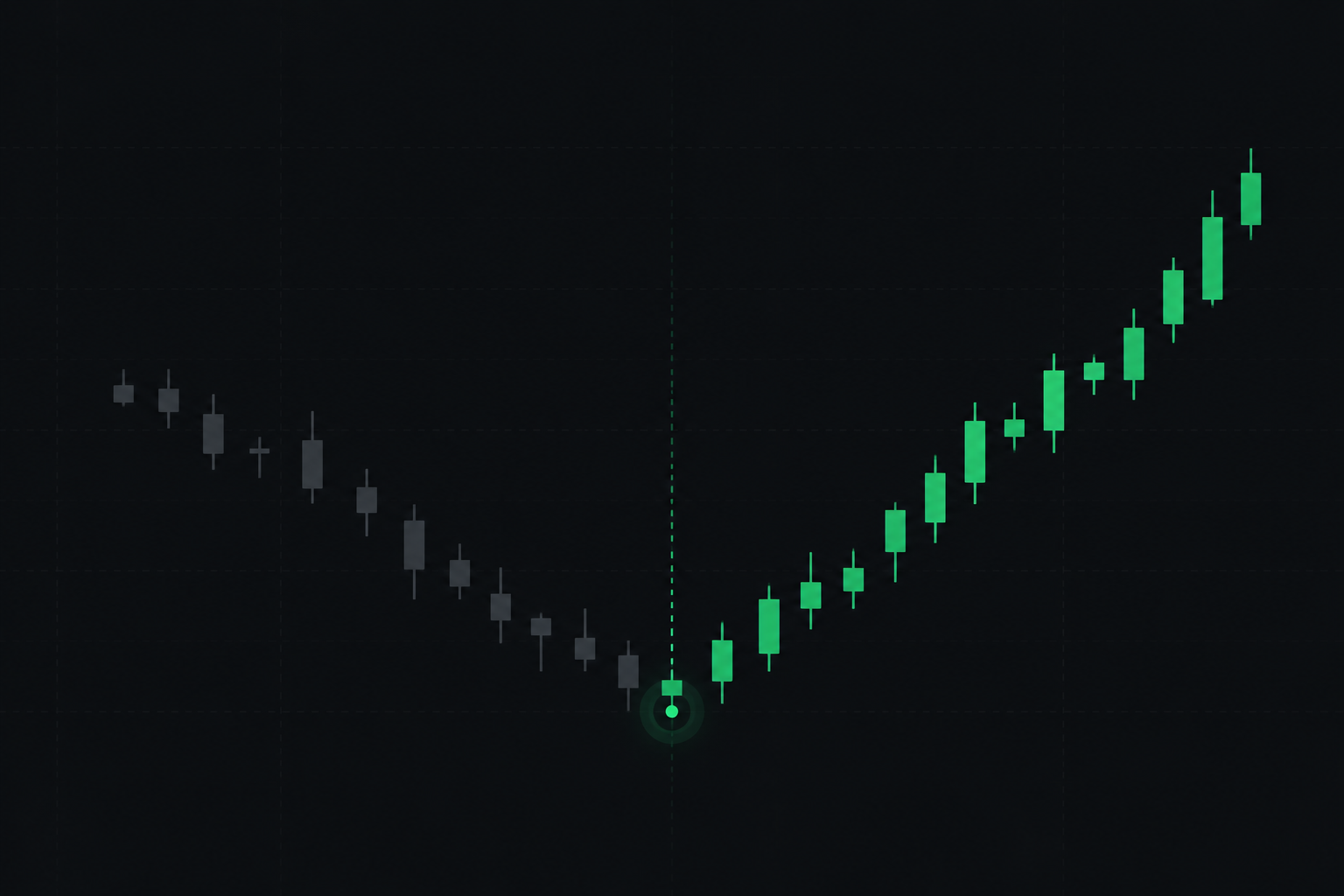
In 2020, the most successful quant fund in history lost more than 20 percent and told its investors it would not be changing the models. The investors who left anyway converted a temporary drawdown into a permanent loss. Every systematic strategy has years like this. What decides your outcome is the yardstick you use to judge them.