✕
Create a free account to see live performance
SEC rules require us to show performance inside a logged-in account.
Every strategy runs live. Inside, you see every holding, every trade, and every move to cash.
SEC rules require us to show performance inside a logged-in account.
Every strategy runs live. Inside, you see every holding, every trade, and every move to cash.
A trading simulator lets you practice with fake money, so mistakes cost nothing. It is a good way to learn the buttons and a poor way to learn whether you have an edge.
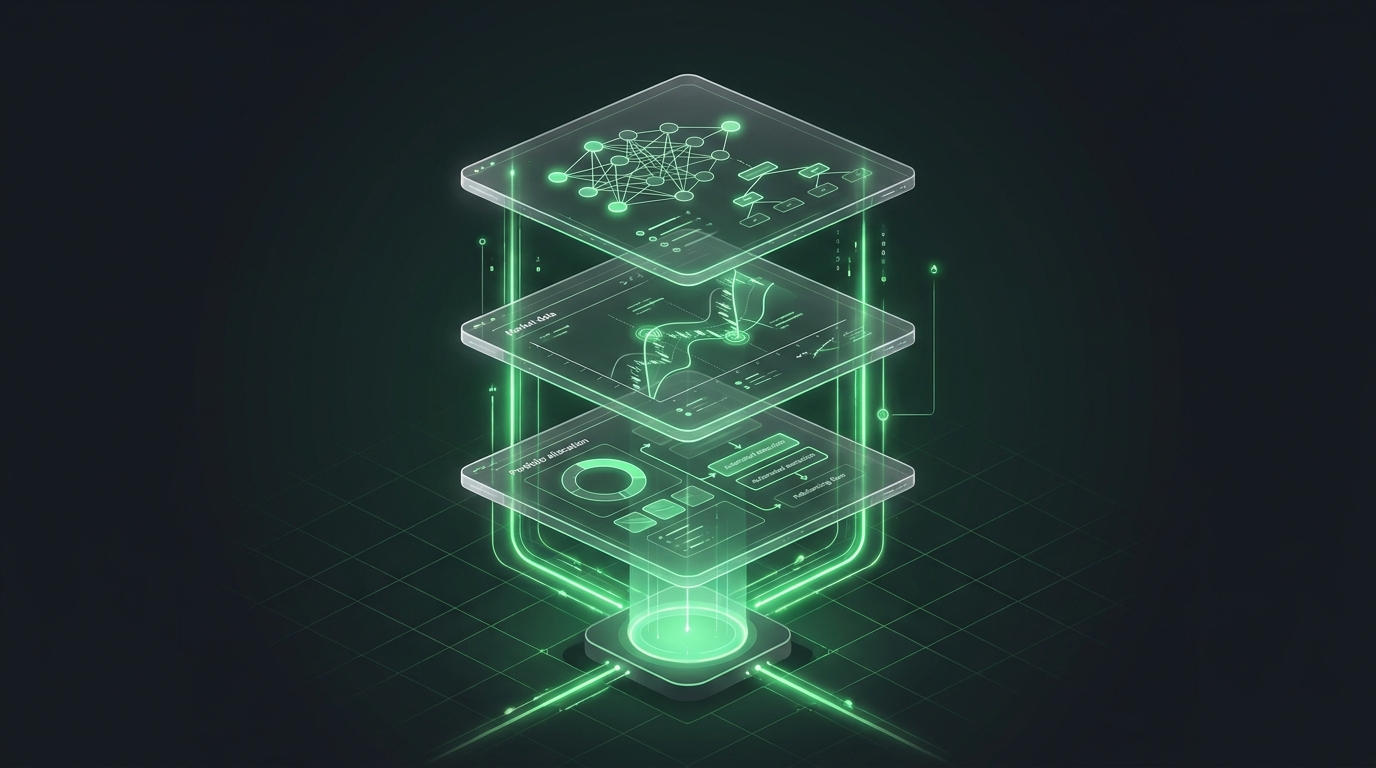
A trading simulator lets you place practice trades with fake money, so mistakes cost nothing. It is a good way to learn the buttons. It is a poor way to learn whether you can make money.
· Trading simulators come in 3 main types: live paper accounts, market replay tools, and strategy backtesters.
· Many are free, including those from TradingView, Webull, and moomoo.
· Simulators teach order types, platform skills, and rule-following well.
· They cannot copy real fills, real costs, or the stress of real losses.
· A study of Taiwan day traders found less than 1% could reliably earn returns above the market after fees.
· Use a simulator to test your process, not to predict your profits.
A trading simulator is software that copies a brokerage account using virtual money instead of real money. You see prices, place orders, and track a portfolio. The software then decides whether and where each order would have filled.
A day trading simulator is the same tool used for trades that open and close within one day. The tool is the same. The pace is faster, so small flaws in the simulation matter more.
There are 3 main types of trading simulator, and each answers a different question. Most traders end up using more than one.
A live paper account runs on today's prices as they happen. Brokers such as Webull, moomoo, Interactive Brokers, and Schwab build one into their apps. It answers the question: can I trade this plan in real time?
A replay tool plays past market data back as if it were live. Schwab's thinkOnDemand replays trading periods from the last several months on thinkorswim. TradingView's Bar Replay does the same on its charts.
Replay lets you practice many trading days in one sitting. It answers the question: how would I have handled that day?
A backtester runs fixed rules over years of past prices in seconds. There is no clicking. It answers the question: how would these exact rules have done in the past?
A day trading simulator can teach you the mechanics of day trading, but not whether you can profit from it. Those are two very different skills.
Research on real day traders shows how hard the second skill is. Barber, Lee, Liu, and Odean (2014) studied day traders in Taiwan from 1992 to 2006. Less than 1% of them could predictably and reliably earn returns above the market after fees.
A simulator would not have warned the other 99%. Practice accounts reward clicking well. Real markets reward having an edge.
Trading simulators fall short in 4 places: fills, costs, hindsight, and emotions. Each one makes simulated results look better than real ones.
In a simulator, your order meets a pretend buyer or seller. Interactive Brokers says its paper fills come only from the top of the book, the best listed prices. A real order of the same size can move further into the market and fill at worse prices.
Day traders feel this most. Small price gaps on many trades add up fast.
Many simulators leave out fees unless you add them. Commissions, spreads, and currency costs can turn a small paper gain into a real loss. Turn on any cost settings your simulator offers.
Replay tools and backtesters use past data, and that brings hindsight. You may half-remember how a big day ended. Rules built on past data can also fit old prices too closely, a problem called overfitting.
Learn why fitted rules break in why the best trading models refuse to learn.
A simulator removes the fear and greed that come with real money. A 2025 study in the Journal of Financial Economics by Sui and Wang tracked investors with both real and simulated accounts. The same people showed stronger biases with real money.
Yes, free trading simulators are good enough for learning mechanics and testing rules. As of October 2026, TradingView, Webull, and moomoo all offer free paper trading. Schwab's paperMoney is free for Schwab clients.
Paying more does not fix the gaps above. No simulator, free or paid, can put real money at risk without being real trading.
Use a simulator to test your process, then judge yourself on the process. These habits help.
1. Write your rules before your first simulated trade.
2. Set the virtual balance to what you would really trade.
3. Turn on commissions and any other cost settings.
4. Trade the same size you would use for real.
5. Log every trade and the rule behind it.
6. In replay mode, pick dates you do not remember.
7. Judge whether you followed your rules, not how much you made.
Short stretches of results are noisy, so luck can look like skill. Read judge the behavior, not the returns for a better yardstick.
Most trading simulators are built for placing trades by hand. Portfolio Lab is a strategy research and simulation tool from alphaAI Capital. It lets you build investment strategies and test them in live markets with virtual money, and it is free to start, with paid plans.
There is no single best one. The most useful is usually the paper mode of the broker you plan to trade with, so you learn the same screens.
Yes. As of October 2026, TradingView, Webull, and moomoo offer free paper trading. Schwab's paperMoney is free for Schwab clients.
Yes, mostly. Paper trading is the most common type of trading simulator, using live prices and virtual money.
No. Simulators use virtual money, so gains are not real and cannot be withdrawn.
Simulated fills are often better than real ones, costs may be left out, and real money changes how people behave.
There is no set rule. A practical test is whether you follow your rules on good and bad days without guessing.
Market replay plays past price data back as if it were live, so you can practice many trading days quickly.
No. It shows you can run your plan. Research on Taiwan day traders found less than 1% reliably beat the market after fees.
Build, test, and deploy your own strategies in Portfolio Lab. Free to start.
Educational & Research Disclosure: The content provided is for informational and educational purposes only and is not intended to constitute investment advice, a recommendation, solicitation, or offer to buy or sell any security. Any discussion of market trends, historical performance, academic research, models, examples, or illustrations is presented solely to explain general financial concepts and does not represent a prediction, guarantee, or assurance of future results. Past performance is not indicative of future results. All investing involves risk, including the possible loss of principal.